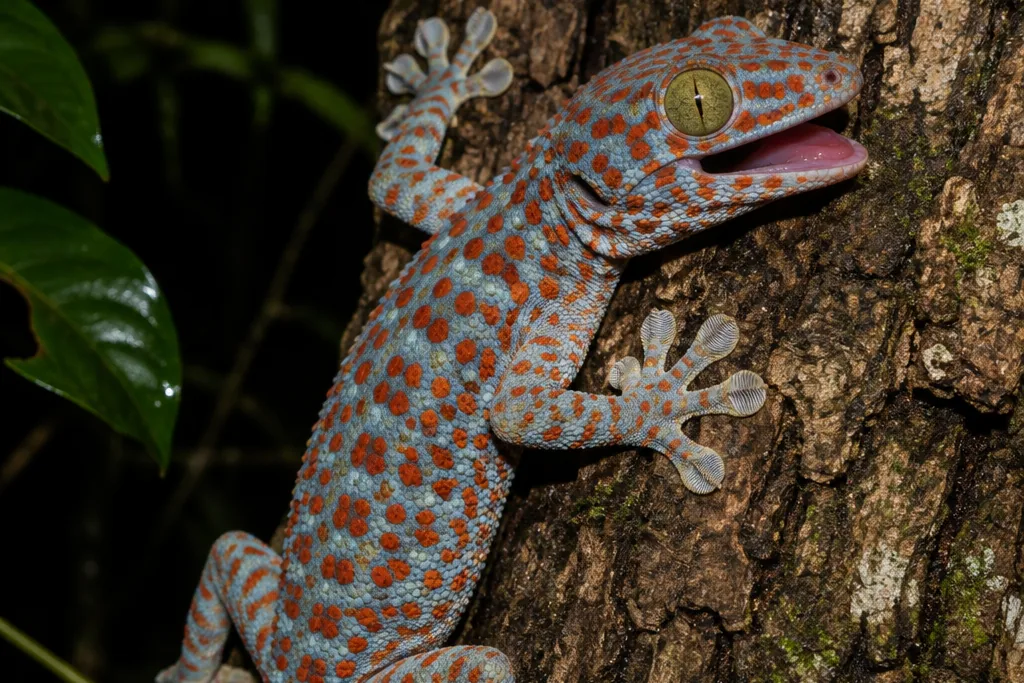
Does a tokay gecko bite hurt?
Yes, but usually less than people expect from the noise. Tokays have strong jaws and lots of small, sharp teeth. A bite from an adult feels like a hard pinch, often breaks the skin in a row of small punctures and may bleed a little. The bigger problem is that tokays often hold on, sometimes for several minutes, and pulling away makes it worse.
Tokay geckos aren't venomous, and serious injuries are rare. The main risk is a minor infection if the bite isn't cleaned.
Why tokays bite
- Fear. Almost every bite is defensive. A tokay that's grabbed, cornered or chased will open its mouth, bark and bite.
- Wild-caught origin. Many tokays sold are still caught in the wild. These animals have spent their lives avoiding predators and are usually much more defensive than captive-bred ones.
- Feeding mistakes. Tokays strike quickly at movement, so fingers near food, or food held in fingers, get bitten.
- Stress. A tokay in an enclosure that's too small, too bare or too busy stays nervous and reactive.
How to get a tokay to let go
- Don't pull or shake your hand. This can tear your skin and injure the gecko's jaw and teeth.
- Put the gecko down. Lower your hand onto a branch, the floor of the enclosure or a table so its feet are on something solid. Many tokays release once they feel secure.
- Wait and keep still. Most let go within a minute or two.
- Use lukewarm water if needed. A gentle trickle of water over the gecko's head, or dipping your hand and the gecko into lukewarm water, usually makes it release.
- Never use alcohol, vinegar or force on the gecko's mouth.
Treating the bite
Wash the bite well with soap and running water, then apply an antiseptic and a plaster if it's bleeding. Reptiles can carry salmonella and other bacteria, so keep an eye on it for a few days. See a doctor if it becomes increasingly red, swollen, hot or painful, or if you have a weakened immune system.
How to tame a tokay, step by step
- Start with a captive-bred animal if you can. It makes the biggest difference.
- Get the setup right first. A tall enclosure (at least 45×45×90 cm), lots of cork hides, correct temperatures and humidity. A secure gecko is a calmer gecko. Our tokay gecko care guide covers this.
- Leave it alone for two weeks. Only feed, mist and spot-clean.
- Feed from soft-tipped tongs every feeding, so your presence predicts food rather than danger.
- Rest your hand in the enclosure for a few minutes in the evening, away from the gecko, without touching it.
- Let it come to you. When it walks onto your hand by itself, keep still and calm, and let it leave when it wants. Never grab or restrain it.
- Keep sessions short and stop before it gets stressed. Signs of stress are an open mouth, barking, darkening colour and tail waving.
Some tokays become steady enough to sit on a hand. Plenty never do, and that's normal for this species. A tokay that you rarely handle but that lives in a great enclosure is a perfectly good pet.
Gloves and safety
Thin gardening or leather gloves are useful when you have to catch a tokay for a vet visit or enclosure clean, as long as you're gentle. Catch it by cupping it from both sides rather than grabbing it from above, and never hold it by the tail, which can drop off. It grows back, but the new tail looks different.
FAQ
Is a tokay gecko bite dangerous? Rarely. It can be painful, break the skin and bleed a little, but tokays aren't venomous. Clean the bite well and watch for signs of infection.
Why won't my tokay gecko let go when it bites? Holding on is part of their defence. Put the gecko down on a solid surface and wait; most let go once they feel secure. Lukewarm water helps if it doesn't.
Can you tame a tokay gecko? Many captive-bred tokays calm down with slow, patient work such as tong-feeding and letting them come to you. Some never enjoy handling, so it's best to see them as display animals.